Download New Guide: The 5 Ingredients Hiding in Places You'd Never Expect

5 ‘Clean’ Kitchen Tools That Add Hidden Toxins to Your Meals (and Safer Swaps)

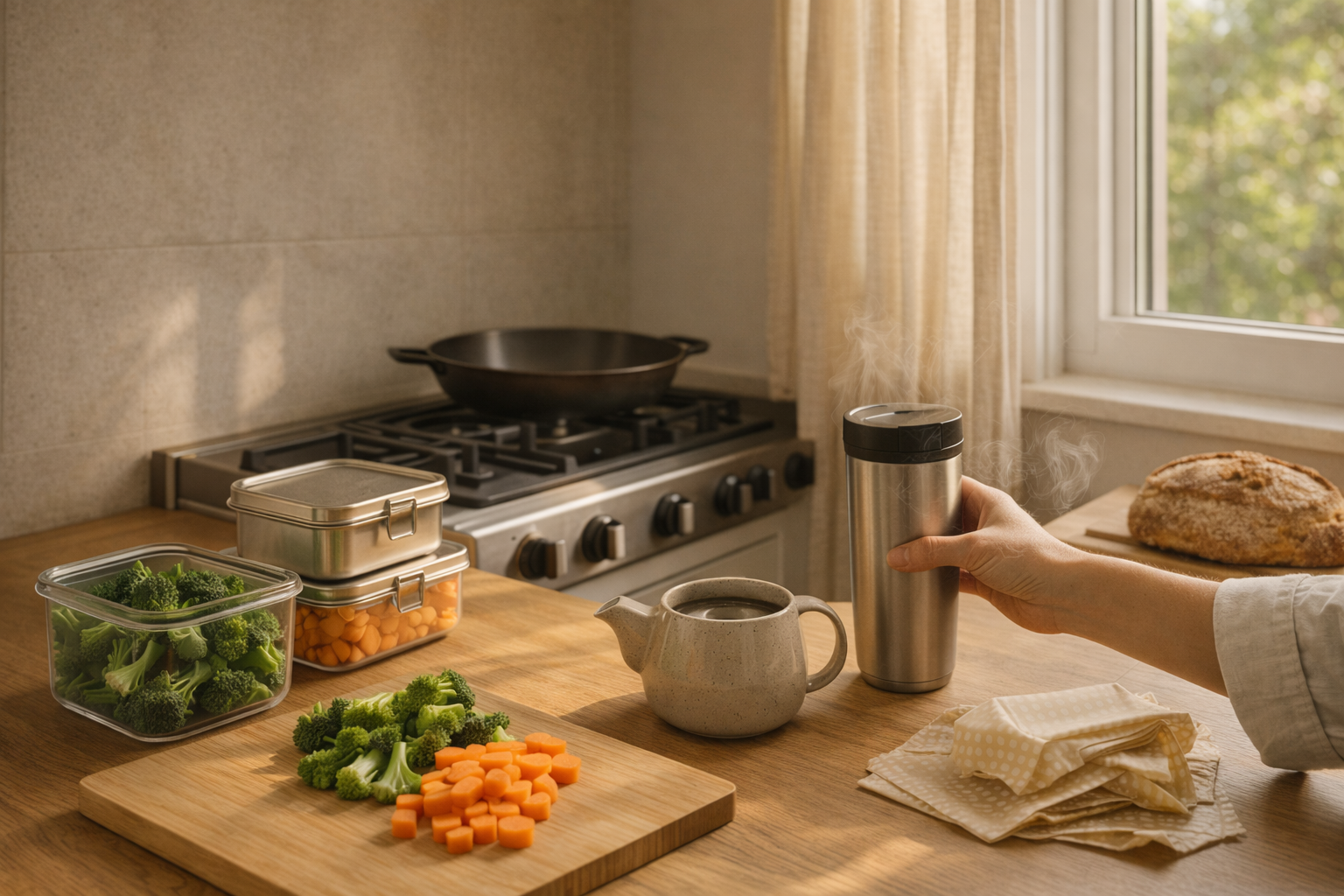
Organic food choices are a great first step, but even the healthiest ingredients can get contaminated by the tools you use every day. It’s easy to overlook sources of invisible plastic and chemicals in your kitchen, but these hidden exposures add up, affecting your family’s health meal after meal. Here’s how to spot the most common offenders and make smarter, safer swaps before your next dish.
Knife Grooves: The Microplastic Trap on Your Cutting Board
That well-worn plastic cutting board may hide more than a few scars. Over time, repeated slicing creates deep grooves that shed microplastic particles straight into your food. Each cut grinds away microscopic bits, especially during high-friction, repetitive chopping.
- Children are at higher risk because microplastics can disrupt gut health, detox pathways, and hormone balance during development.
- Bamboo or solid wood boards don’t shed harmful particles and are much cleaner alternatives for daily use.
Plastic Utensils and Containers: Not as “BPA-Free” as You Think
Marketing claims like “BPA free” often give a false sense of security. Many products simply use BPS or BPF, related chemicals that behave similarly in the body. When heated, scratched, or exposed to acidity or fat, these plastics release hormone-disrupting compounds into your food.
- Plastics leach more when exposed to tomato sauce, dressings, citrus, or even breast milk.
- Glass and stainless steel containers and utensils substantially reduce exposure.
To-Go Coffee Cups: Sipping Plastics, Not Just Latte
Opting for paper cups with plastic lids? These are lined with a thin plastic film to prevent leaks. When you pour hot coffee, that lining releases tens of thousands of microplastic particles directly into your drink, day after day.
- Switch to glass or stainless steel travel mugs with non-plastic lids to avoid exposure.
Cling Wrap: Stretchy and Sneaky
Soft, flexible plastic wrap contains plasticizers like phthalates. When the wrap touches warm leftovers, fatty, or acidic foods, more of these chemicals migrate into your meals. Phthalates disrupt hormones, especially in children.
- Beeswax wraps are a great option for cooled foods.
- Glass containers with tight lids let you avoid plastic wrap entirely.
Non-Stick Cookware: Hidden Forever Chemicals
Convenient non-stick surfaces often contain PFAS, also called “forever chemicals” because they don’t break down. Scratches or overheating cause these compounds to migrate into foods and accumulate over time.
- Choose seasoned cast iron, stainless steel, or true ceramic cookware from transparent brands that test for leaching.
Quick Wins: What to Swap First
Feel overwhelmed? Start with the tools that touch food most, especially those exposed to heat, fat, or friction. These are the prime sources of invisible chemical transfer.
- Replace old plastic cutting boards with wood or bamboo.
- Use glass or stainless steel for food storage and lunchboxes.
- Bring your own mug when you get coffee on the go.
- Switch to safer cookware and skip plastic lids or covers.
The Bottom Line
Reducing toxin exposure in your kitchen isn’t about perfection. It’s about making strategic swaps in the places where invisible plastics and chemicals infiltrate your meals most. Simple changes make a big difference over time, for your health, your family, and even the planet.
Dr. Yvonne’s Plastic Swaps – Kitchen
Links provided on this page are affiliate links, which means if you click on it and make a purchase I may earn commission. The commission comes at no cost to you and allows me to continue my research. Note- I only recommend products that I personally use and/or trust. I will always disclose whether a link is an affiliate link, and never recommend products solely for the purpose of commission.
References
- Qu J, Zeng J, Mou L, Wu X, Ha M, Liu C. Plastic tableware use, microplastic accumulation, and sperm quality: from epidemiological evidence to FOXA1/p38 mechanistic insights. J Nanobiotechnology. 2025 Oct 9;23(1):634. doi: 10.1186/s12951-025-03747-7. PMID: 41068921; PMCID: PMC12512996.
- Qu J, Zeng J, Mou L, Wu X, Ha M, Liu C. Plastic tableware use, microplastic accumulation, and sperm quality: from epidemiological evidence to FOXA1/p38 mechanistic insights. J Nanobiotechnology. 2025 Oct 9;23(1):634. doi: 10.1186/s12951-025-03747-7. PMID: 41068921; PMCID: PMC12512996.
- Ranjan VP, Joseph A, Goel S. Microplastics and other harmful substances released from disposable paper cups into hot water. J Hazard Mater. 2021 Feb 15;404(Pt B):124118. doi: 10.1016/j.jhazmat.2020.124118. Epub 2020 Oct 5. PMID: 33091697.
- Wang Y, Qian H. Phthalates and Their Impacts on Human Health. Healthcare (Basel). 2021 May 18;9(5):603. doi: 10.3390/healthcare9050603. PMID: 34069956; PMCID: PMC8157593.
- Yadav H, Khan MRH, Quadir M, Rusch KA, Mondal PP, Orr M, Xu EG, Iskander SM. Cutting Boards: An Overlooked Source of Microplastics in Human Food? Environ Sci Technol. 2023 Jun 6;57(22):8225-8235. doi: 10.1021/acs.est.3c00924. Epub 2023 May 23. PMID: 37220346.
- Díaz-Galiano FJ, Gómez-Ramos MJ, Beraza I, Murcia-Morales M, Fernández-Alba AR. Cooking food in microwavable plastic containers: in situ formation of a new chemical substance and increased migration of polypropylene polymers. Food Chem. 2023 Aug 15;417:135852. doi: 10.1016/j.foodchem.2023.135852. Epub 2023 Mar 7. PMID: 36924723.
- Hernandez LM, Xu EG, Larsson HCE, Tahara R, Maisuria VB, Tufenkji N. Plastic Teabags Release Billions of Microparticles and Nanoparticles into Tea. Environ Sci Technol. 2019 Nov 5;53(21):12300-12310. doi: 10.1021/acs.est.9b02540. Epub 2019 Sep 25. PMID: 31552738.
- Gan HJ, Chen S, Yao K, Lin XY, Juhasz AL, Zhou D, Li HB. Simulated Microplastic Release from Cutting Boards and Evaluation of Intestinal Inflammation and Gut Microbiota in Mice. Environ Health Perspect. 2025 Apr;133(3-4):47004. doi: 10.1289/EHP15472. Epub 2025 Apr 9. PMID: 40042913; PMCID: PMC11980920.