Microplastics aren’t just floating in oceans, they’re in your drinking water, the air at home, and even human breast milk. The average person ingests tens of thousands of particles each year, often without realizing it. With so much conflicting advice and trendy detox products, it’s hard to know what actually helps. As a toxicologist, I want to give you science-based answers so you can make smart choices to reduce your family’s exposure- no perfectionism, gimmicks, or fear required.
What Are Microplastics and How Do They Get Into Your Body?
Microplastics are tiny plastic particles, typically less than 5mm in diameter. While most people associate them with polluted beaches or sea life, you’re exposed in unexpected ways every day. Common sources include:
- Tap water from both municipal supplies and private wells
- Common table salt and even processed foods
- Household dust, especially in homes with synthetic carpets and furniture
- Food packaging and non-stick cookware, as coatings degrade or heat releases particles
- Personal care products that contain or are stored in plastics
Children are especially vulnerable due to their behaviors and developmental stage. Studies already link microplastic exposure to hormone disruption, chronic inflammation, cardiovascular disease, and increased risk of colon cancer. The full range of long-term risks is still being researched.
Why Detox Kits and Perfectionism Won’t Protect You
It’s easy to feel overwhelmed or swayed by expensive detox kits and “miracle” solutions. But even big changes, like cutting out bottled water, don’t address the less obvious sources, such as indoor dust or older non-stick pans. No home is plastic-free, and trying to eliminate all plastics leads to burnout.
The real solution is to start with simple, high-impact swaps:
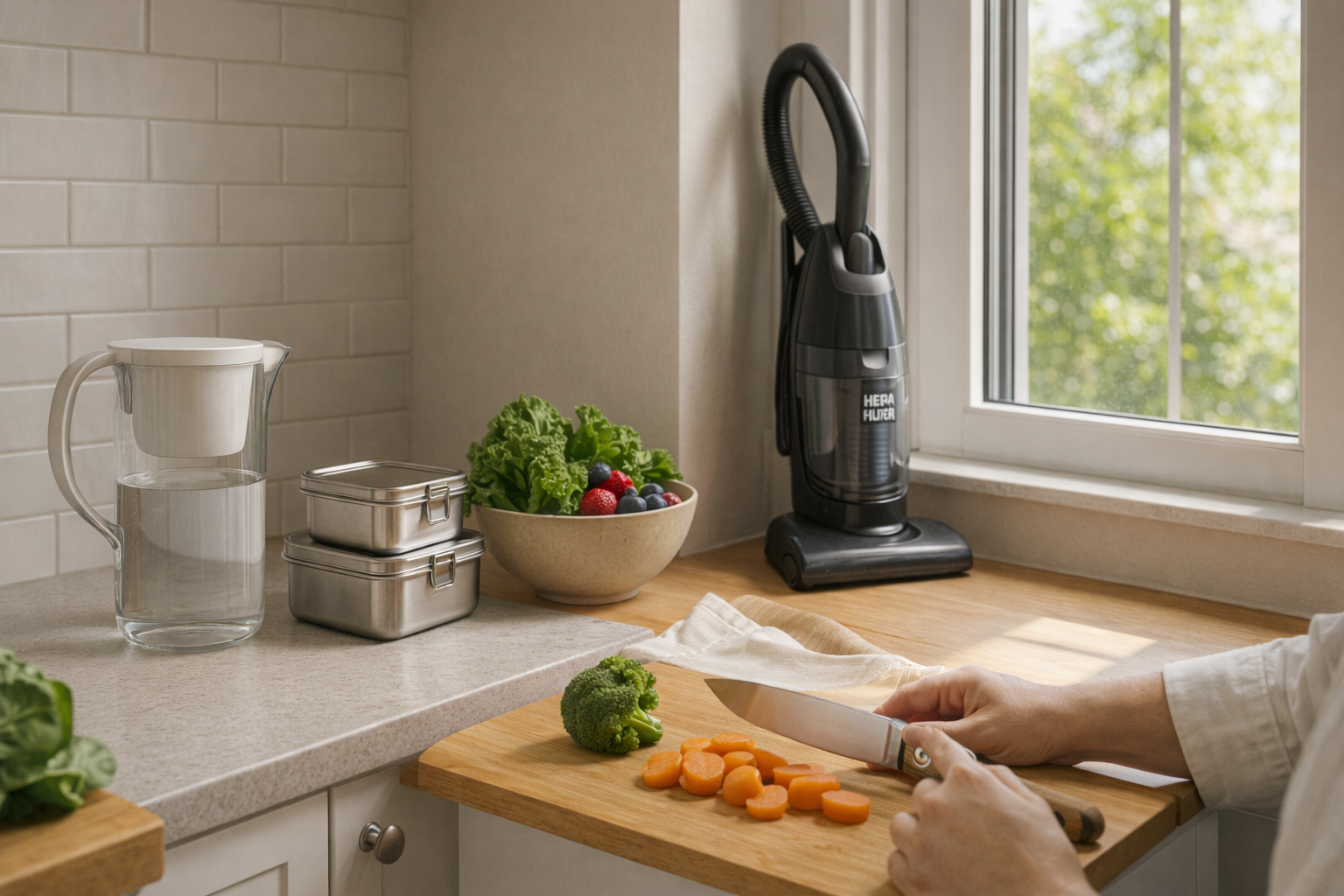
- Water: Install a high-quality filter for drinking and cooking water.
- Food storage: Switch to glass or stainless steel containers, especially for hot foods.
- Air quality: Use a vacuum with a HEPA filter, dust with a damp cloth, and open windows for ventilation.
- Clothing and cleaning: Buy fewer new synthetic clothes and use a microfiber-catching laundry ball.
Supporting Your Body’s Detox Systems
You can’t avoid every exposure, but you can help your body eliminate what does get in. Your liver, kidneys, gut, lymph, and skin are your natural detox systems. To support them:
- Stay hydrated. Water is essential for kidney and gut function.
- Eat more fiber from foods like berries, leafy greens, and chia seeds; fiber binds microplastics and promotes removal through the gut.
- Include antioxidant-rich foods (dark chocolate, turmeric, cruciferous vegetables) to help repair and prevent damage from oxidative stress.
- Promote lymphatic flow through daily movement, dry brushing, sauna, or warm baths.
Are There Safe, Science-Backed Supplements?
If you’ve covered the basics and want to boost your body’s defenses, two options have early scientific support:
- Chitosan: A natural fiber from shellfish, shown to bind microplastics in the digestive tract and help remove them.
- Chlorella: A nutrient-rich algae studied for its ability to bind toxins, possibly including microplastics.
- Glutathione: Known as the master antioxidant, it supports cellular detox and recovery from oxidative stress.
Supplements aren’t shortcuts. They’re supportive tools, not replacements for healthy habits or medical advice. Consult your healthcare provider before adding new supplements, especially if you have allergies or medical conditions.
Key Takeaways: Confidence, Not Perfection
- Focus your energy on high-impact swaps like water filters, quality storage, and minimizing indoor dust.
- Support your body’s own detox mechanisms with hydration, fiber, antioxidants, and routine movement.
- Supplement wisely, but only after the basics are in place and with professional guidance.
Avoiding microplastics isn’t about achieving a perfect, chemical-free home. It’s about consistent, informed steps that build a healthier environment for you and your family.
Dr. Yvonne’s Favorite Plastic Swaps –
Links provided on this page are affiliate links, which means if you click on it and make a purchase I may earn commission. The commission comes at no cost to you and allows me to continue my research. Note- I only recommend products that I personally use and/or trust. I will always disclose whether a link is an affiliate link, and never recommend products solely for the purpose of commission.
Cora Laundry Ball https://coraball.com/DRYVONNE
Guppy Friend Washing Bag https://bit.ly/guppyfriendbag
References
- Ullah S, Ahmad S, Guo X, Ullah S, Ullah S, Nabi G, Wanghe K. A review of the endocrine disrupting effects of micro and nano plastic and their associated chemicals in mammals. Front Endocrinol (Lausanne). 2023 Jan 16;13:1084236. doi: 10.3389/fendo.2022.1084236. PMID: 36726457; PMCID: PMC9885170.
- https://doi.org/10.1016/j.emcon.2025.100506
- Liu D, Shimizu M. Ingesting chitosan can promote excretion of microplastics. Sci Rep. 2025 Apr 23;15(1):14041. doi: 10.1038/s41598-025-96393-w. PMID: 40268980; PMCID: PMC12018927.
- https://doi.org/10.1002/fft2.437
- Esmaeili Nasrabadi A, Eydi M, Bonyadi Z. Utilizing Chlorella vulgaris algae as an eco-friendly coagulant for efficient removal of polyethylene microplastics from aquatic environments. Heliyon. 2023 Nov 13;9(11):e22338. doi: 10.1016/j.heliyon.2023.e22338. PMID: 38045186; PMCID: PMC10692900.